


- Author: Abigael Wanjala
- Date: July 30, 2026
From Harambee to Homepage: The Story of How Saccos Went Digital
Before there was an app, there was a table.
A wooden one, most likely. In a church hall, a community centre, a sitting room borrowed for the afternoon. Around it sat people who had decided, collectively, that their money would go further together than it would alone. Someone kept a ledger. Someone else collected contributions in a tin or an envelope. And at the end of the meeting, the numbers were read aloud, agreed upon, and recorded by hand.
This is where it started. Not in a boardroom. Not in a technology incubator. Around a table, with chai, and a shared belief that community is a form of capital.
It is perhaps the oldest financial principle Kenya has.
Umoja ni nguvu.
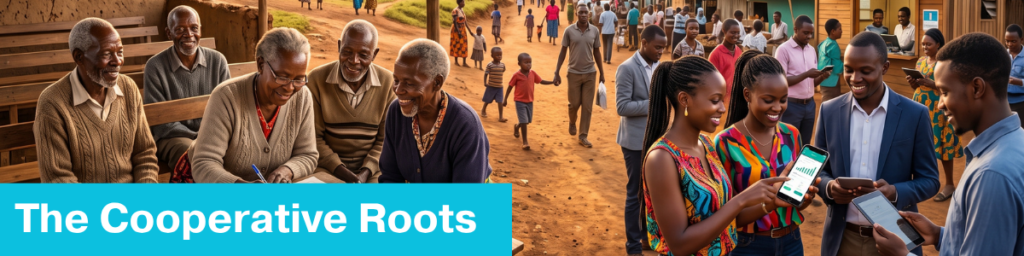
The formal cooperative movement in Kenya dates back to the colonial era, when British administrators introduced agricultural cooperatives as a way of organising smallholder farmers. Coffee cooperatives in Central Kenya, pyrethrum societies in the Rift Valley, dairy cooperatives in various regions were among the earliest formal expressions of the idea that people with common interests could pool resources and negotiate better outcomes together.
After independence in 1963, the cooperative movement expanded rapidly. The government saw cooperatives not just as economic structures but as tools of national development, a way to channel resources into communities, distribute opportunity more broadly, and build an economy that worked from the bottom up as much as the top down.
Saccos, or Savings and Credit Cooperative Societies, emerged as the financial expression of this cooperative spirit. Where agricultural cooperatives organised production, Saccos organised money. Members contributed regularly, earned returns on their savings, and accessed affordable credit that banks, with their collateral requirements and lengthy processes, largely did not offer to ordinary Kenyans.
By the 1970s and 1980s, Saccos had become a cornerstone of the financial lives of teachers, civil servants, farmers, and factory workers across the country. The payroll Sacco, where contributions were deducted directly from salary, became particularly widespread, offering a discipline and reliability that informal savings groups could not always guarantee.
The cooperative was the pillar of the economy.

For all their community strength, traditional Saccos had a fundamental constraint: they were built on paper, proximity, and trust between people who knew each other.
To join a Sacco, you needed to physically present yourself, fill out forms, be vouched for by existing members, and attend meetings. To make a deposit, you went to an office or waited for the collector to come to you. To check your balance, you asked. To apply for a loan, you queued.
This model worked well for stable, geographically concentrated communities, a school staffroom, a factory floor, or a government ministry. But Kenya was changing.
Urbanisation was accelerating. People were moving to cities for work, away from the community structures that had made traditional Saccos function. The growing informal sector, market traders, boda boda operators, small business owners, and freelancers, had no payroll and no fixed address. Young people entering the workforce had different expectations of financial institutions. They wanted speed, transparency, and the ability to transact without travelling anywhere.
The traditional Sacco model, built for a different era and a different economy, was struggling to keep up.
Saccos zikabadilika pia.
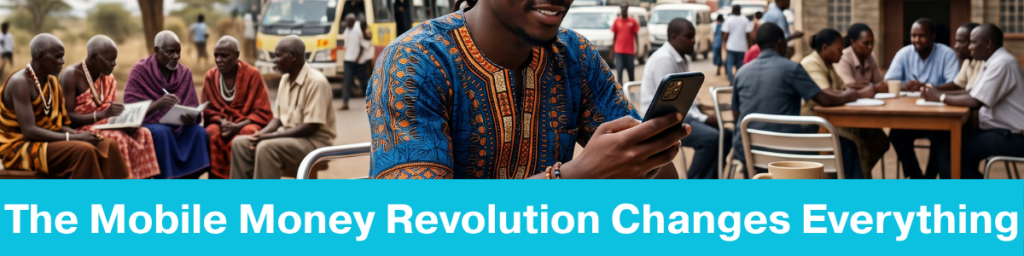
The single most important event in the history of digital Saccos in Kenya was not the launch of any Sacco. It was the launch of M-Pesa in 2007.
When Safaricom introduced mobile money, it did something that banks had failed to do for decades. It made financial transactions accessible to ordinary Kenyans on ordinary phones, without a bank account, without collateral, and without a branch visit. Within a few years, M Pesa had penetrated deep into rural and urban Kenya alike, fundamentally changing how people thought about money movement.
The implications for Saccos were profound. If money could move via a phone, then the geographical and logistical barriers that had limited traditional Saccos could be dissolved. Contributions could be made remotely. Savings could be tracked digitally. Loans could be applied for and disbursed without anyone physically going anywhere.
The infrastructure for digital financial services was being built, and the early pioneers in the Sacco space began to see what it made possible.
Early digital experiments were modest, SMS notifications of account balances and basic online portals for members to view statements. But they pointed toward something more significant. The cooperative model, which had always been about removing barriers between people and financial opportunity, was about to gain tools powerful enough to remove barriers that had seemed permanent.

By the early 2010s, smartphone penetration in Kenya was rising steadily. Mobile internet was improving. A generation of Kenyans who had grown up with technology was entering the workforce and forming the urban population that would become the natural constituency of a new kind of financial institution.
The digital Sacco, fully app based, paperless, and accessible without physical presence, began to emerge in this environment. The idea was not to replace the cooperative spirit. It was to carry that spirit into a new medium, making the solidarity and collective benefit of the traditional Sacco available to people who could not or would not show up to a meeting in a church hall on the third Saturday of every month.
For the first time, a young professional in Nairobi could join a Sacco, make monthly contributions, track their savings, and apply for a loan entirely from their phone during their commute. A Kenyan in the diaspora could stay connected to a savings community back home without the friction of international transfers and time zone negotiations. A market trader with no formal employment could build a savings history and access credit based on that history rather than a payslip.
The digital Sacco was, in many ways, a return to the original promise of the cooperative movement, financial inclusion for people the formal banking system had left behind, delivered through twenty first century infrastructure.
Teknolojia ilifungua milango ambayo ilikuwa imefungwa kwa muda mrefu.
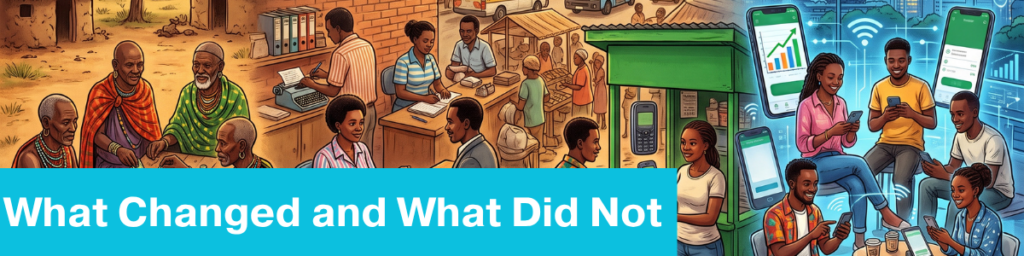
It is worth pausing on what the digital transformation actually changed, and what it did not.
It changed access. It changed speed. It changed transparency. Members could now see exactly what was happening with their money in real time, rather than waiting for a quarterly statement or an AGM report. It changed the geography of membership, making it possible for Saccos to serve members across the country and across the world.
But the core of what a Sacco is did not change. It is still member owned. Members still have a voice in governance. The profits still flow back to members rather than to external shareholders. The loan model still fundamentally relies on the savings and solidarity of the community.
The cooperative principle, that people are stronger together than apart and that collective resources can create individual opportunity, is the same principle that brought people around that wooden table decades ago. Technology gave it new reach. It did not give it new values. Those were already there.
Maadili ya Sacco hayabadiliki. Methods tu ndio zinabadilika.

Today, digital Saccos in Kenya are a distinct and growing category within the broader financial sector. They sit at the intersection of traditional cooperative values and modern fintech capability, offering members the trust, collective benefit, and democratic governance of a Sacco alongside the speed, convenience, and data driven tools of a digital platform.
The most advanced among them now offer features that would have been unimaginable to the people around that wooden table. AI driven credit scoring that assesses ability to repay based on financial behaviour rather than formal employment history. Goal based savings accounts with compound interest that grows continuously in the background. Loyalty programs that reward members not just for saving but for growing, referring, and engaging. Insurance products bundled into the savings experience. Digital wallets that replace cash entirely for daily transactions.
And yet the member meeting still happens. The vote still counts. The surplus still belongs to the community.

The history of digital Saccos in Kenya is still being written.
Penetration of formal financial services, while significantly improved from a generation ago, still leaves many Kenyans underserved. The informal economy, enormous, dynamic, and largely self financed, remains an opportunity that the right digital cooperative model could serve in ways that banks cannot and traditional Saccos have not yet reached.
Technology will keep evolving. AI, open banking, blockchain based cooperative structures, and real time cross border savings will all shape what the Sacco of 2035 looks like in ways we can only partially anticipate.
But if the history of the movement teaches anything, it is that the technology matters less than the intention behind it. The Sacco has survived and evolved through colonial disruption, post independence restructuring, economic turbulence, and now a digital revolution because the core idea is sound: ordinary people, pooling ordinary resources and governed by shared principles, can create extraordinary outcomes for each other.
That idea was true around the wooden table.
It is true on the app.
The story is not over.
Facebook
Twitter
LinkedIn
WhatsApp
So Apparently AI Has Been Managing Your Money This Whole Time
Author: Abigael Wanjala Date: September 24, 2026 So Apparently AI Has Been Managing Your Money This Whole Time Okay so raise your hand if you have ever done any of the following.Googled "why is my account always empty before month end" at 11pm. Asked your Sacco app to categorise your
The Goal Everyone Should Be Saving Towards Together
Author: Abigael Wanjala Date: September 17, 2026 The Goal Everyone Should Be Saving Towards Together Let us talk about group money for a second. Not the Chama that fell apart
The Wallet That Grew Up
The Wallet That Grew Up Author: Abigael Wanjala Date: September 10, 2026 Comments: No Comments There is a moment most of us remember, even if we do not talk about
You Named It. Now Save For It.
Author: Abigael Wanjala Date: August 27, 2026 You Named It. Now Save For It. Somewhere on your phone right now, there is a screenshot.Maybe it is a holiday destination you
The Business That Almost Did Not Make It Past Year Two
The Business That Almost Did Not Make It Past Year Two Author: Mombo Sacco Date: August 20, 2026 Comments: No Comments Grace started her catering business the way many small
The Savings Account That Actually Fits Your Life
Here is something that happens to a lot of people who are trying to get serious about saving in Kenya.They decide they want to start. They look at their income,
What We Knew Before We Forgot
Author: Abigael Wanjala Date: August 6, 2026 What We Knew Before We Forgot There is a particular kind of wisdom that lives in childhood. Not the kind that comes from