


The Wallet That Grew Up
- Author: Abigael Wanjala
- Date: September 10, 2026
- Comments: No Comments
Views: 9
There is a moment most of us remember, even if we do not talk about it often.
The first time we sent money on a phone.
For many Kenyans, that moment arrived with M Pesa sometime around 2007, and it felt, there was no other word for it, like magic. You typed a number, entered an amount, pressed send, and someone on the other side of the city or the other side of the country had money in their hands almost instantly. No bank. No queue. No form to fill out. Just a phone and a PIN.
It was, at the time, genuinely extraordinary. And it changed not just how Kenyans moved money but how they thought about money, what it was, where it lived, how quickly it could travel.
Safe to say money had grown wings.😁
But that was nearly twenty years ago. And the world that digital wallet was built for has changed considerably since then.
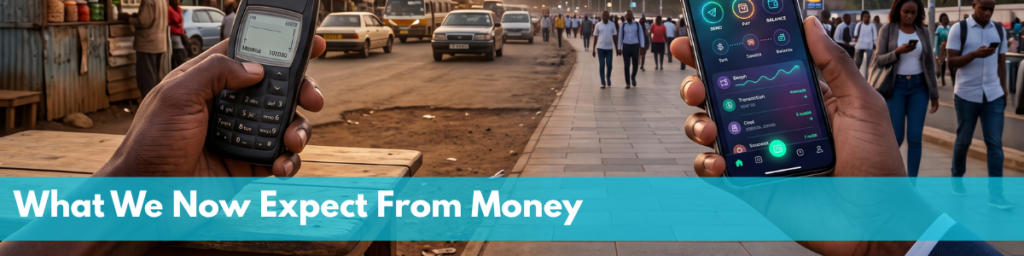
The version of financial life that most Kenyans are navigating today is significantly more complex than the one MPesa was originally designed to serve.
We are managing more transactions, across more channels, for more purposes simultaneously. We are running small businesses from our phones. We are splitting bills with friends across three different apps. We are paying school fees, buying goods at supermarkets, sending money to families in different counties, settling rent, paying insurance premiums, and somehow trying to keep track of where every shilling went, all from the same device we use to watch TikTok and read the news.
The simple digital wallet, send money, receive money, buy airtime, has not disappeared. But it has started to feel, for many people, like a tool that was built for a slightly simpler version of life than the one they are actually living.
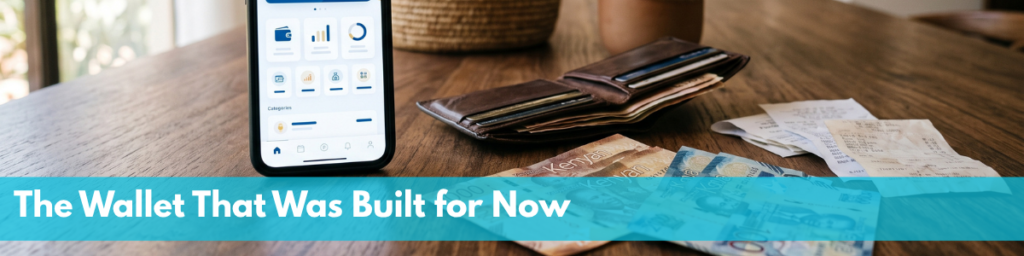
The Mombo Sacco MWallet was launched in 2024 with a specific question in mind: what does a digital wallet need to do for someone whose financial life looks like the one described above?
Not the 2007 version of financial life. The 2024 one. The one that involves daily transactions across multiple channels, the management of both personal and business finances, a need for privacy that earlier wallets did not prioritise, and an expectation that money management should be as organised and transparent as everything else on a smartphone.
The answer to that question is a wallet that does considerably more than send and receive.
It is worth walking through what that actually means in practice, because the gap between a basic mobile wallet and what the MWallet offers is larger than most people realise until they are inside it.

Sending and receiving money is the baseline, and MWallet does it instantly, to bank accounts, M Pesa, Airtel Money, Paybill numbers, Till numbers, and Pochi la Biashara. The full ecosystem of Kenyan payments, accessible from one place.
But then it goes further.
Split a Bill is the feature that anyone who has ever been at a group dinner and watched fifteen minutes evaporate while people argue about who owes what will immediately understand. You enter the total, select the participants, divide, either equally or by custom amounts, and everyone gets a notification with their share. The social friction of shared expenses, dissolved.
Automated Savings lets you set rules that move money from your MWallet to your savings account automatically, on a fixed date, as a percentage of your balance, as a round up on every transaction, or when your balance crosses a threshold. The money moves before you have a chance to spend it on something else, which is, frankly, how most successful savers actually save.
Payment Scheduling allows you to set up future payments in advance, rent, insurance, regular contributions, so that recurring obligations are handled without requiring you to remember them every month. This is a small feature with an outsized impact on financial stress.
Multi Level Transaction Approvals is the feature built for businesses and groups. No single person can initiate and complete a transaction alone. Every significant movement of money requires a second authorisation. For Chamas, SMEs, and family accounts, this single feature removes more conflict than any conversation about trust ever could.
Privacy and Anonymisation ensures that when you send money, your name and contact information are not disclosed to the recipient. In a country where personal privacy in financial transactions has historically been limited, this is a meaningful and considered protection.
There is something worth reflecting on in all of this that goes beyond the feature list.
A wallet, any wallet, physical or digital, is not just a container for money. It is a system for organising your relationship with money. The way it is designed shapes how you think about transactions, how you track spending, how much visibility you have into your own financial behaviour, and whether managing money feels like a burden or something closer to a natural, integrated part of daily life.
The physical wallet in your pocket, if you still carry one, has changed almost nothing in a hundred years. It holds cards and notes and receipts you mean to deal with later. It gives you no information about what has left it or what remains. It requires you to carry cash in a world that is increasingly cashless, and to manage relationships between it and your phone and your bank account and your mobile money that no one designed and everyone navigates imperfectly.
The digital wallet has been trying to solve this for years. The best versions of it, the ones that are genuinely useful rather than just functional, do something specific: they make the invisible visible. They turn the chaotic flow of money in and out of your life into something you can actually see, understand, and act on.
Money that is visible can be managed.
This is what a well designed wallet is ultimately for. Not convenience, though it provides that. Not speed, though it delivers that too. But clarity. The clarity that comes from knowing where your money is, where it went, and where it is going, which is, when you think about it, the foundation of every good financial decision you will ever make.

The honest answer is that the MWallet is useful for almost anyone navigating a financial life of any complexity in Kenya today.
It is for the professional who pays rent, contributes to a Chama, sends money home to family, and manages a side income, all from the same phone and increasingly frustrated that this requires three different apps and a mental accounting system that would exhaust an accountant.
It is for the small business owner who needs to receive payments, pay suppliers, manage staff, and keep business finances from bleeding into personal ones, and who does not have the budget for a finance department but has a phone and a Mombo App.
It is for the parent navigating back to school season who needs to pay fees by Paybill, buy books at a Till number, send money to a spouse for the uniform shopping, and somehow track all of it without losing their mind.
It is for the Chama treasurer who is tired of being the single point of failure for a group’s finances and wants a system where accountability is built in rather than dependent on everyone trusting one person completely.
And it is for anyone who has ever looked at their mobile money statement at the end of the month and thought: where exactly did all of that go?
Good question. The answer is in MWallet.

Digital wallets have come a long way since that first moment of magic in 2007.
What began as a simple, brilliant solution to the problem of moving money without a bank has evolved, through many iterations, many providers, many features, into something that is beginning to approach what managing money actually requires in modern life.
The MWallet is Mombo Sacco’s contribution to that evolution. Built not to replicate what already exists but to extend it, with more features, more privacy, more integration with savings and lending and community, into something that serves the full complexity of a Kenyan financial life in 2026.
The money has not changed. What we can do with it has.
Time changes. The tools must change with it.
Facebook
Twitter
LinkedIn
WhatsApp
The Wallet That Grew Up
The Wallet That Grew Up Author: Abigael Wanjala Date: September 10, 2026 Comments: No Comments There is a moment most of us remember, even if we do not talk about it often. The first time we sent money on a phone. For many Kenyans, that moment arrived with M Pesa
You Named It. Now Save For It.
Author: Abigael Wanjala Date: August 27, 2026 You Named It. Now Save For It. Somewhere on your phone right now, there is a screenshot.Maybe it is a holiday destination you
The Business That Almost Did Not Make It Past Year Two
The Business That Almost Did Not Make It Past Year Two Author: Mombo Sacco Date: August 20, 2026 Comments: No Comments Grace started her catering business the way many small
The Savings Account That Actually Fits Your Life
Here is something that happens to a lot of people who are trying to get serious about saving in Kenya.They decide they want to start. They look at their income,
What We Knew Before We Forgot
Author: Abigael Wanjala Date: August 6, 2026 What We Knew Before We Forgot There is a particular kind of wisdom that lives in childhood. Not the kind that comes from
From Harambee to Homepage: The Story of How Saccos Went Digital
Author: Abigael Wanjala Date: July 30, 2026 From Harambee to Homepage: The Story of How Saccos Went Digital Before there was an app, there was a table.A wooden one, most
Nobody Taught Us This. And It Shows.
Author: Abigael Wanjala Date: July 23, 2026 Nobody Taught Us This. And It Shows. Let us be honest about something.Most of us grew up in homes where money was either