


- Author: Abigael Wanjala
- Date: May 14, 2026
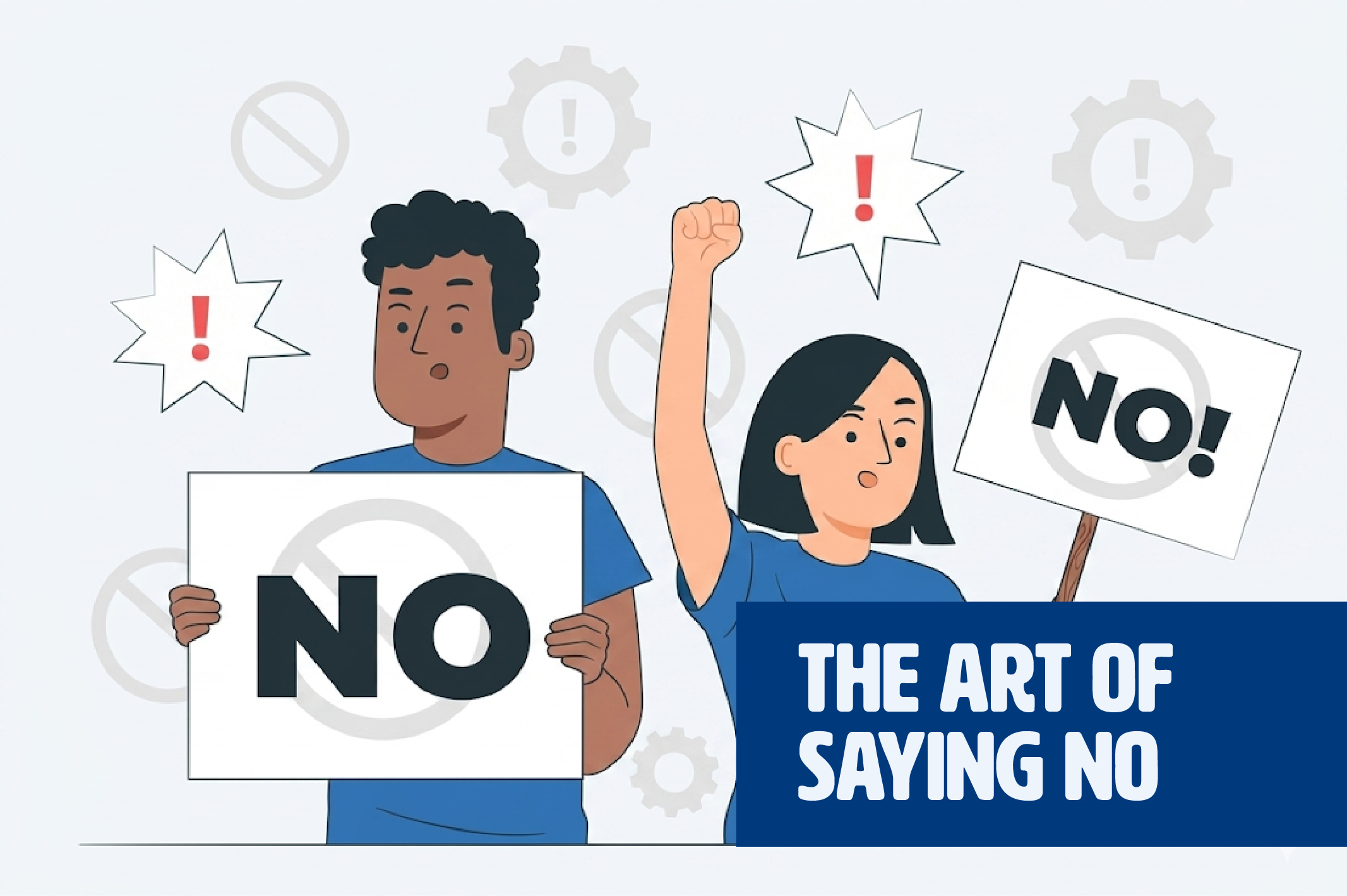
The Art of Saying No :A guide to financial self-respect
Furaha ya kweli haiuzwi. And yet, every weekend, millions of people buy overpriced brunches, last-minute flights, and elaborate club nights they cannot truly afford, all to avoid a single two-letter word: No.
Let us be honest. The 21st-century social calendar is expensive. Harusi, rooftop bars, destination birthdays, “quick” getaways that cost three months of savings… the invitations never stop arriving. And declining them? That feels almost criminal. We call it being cheap. We call it antisocial. We quietly shame ourselves all the way to the ATM.
But what if saying “No” was actually a sophisticated financial and social skill, one that the wisest, most grounded people in your life have quietly mastered?
The Hidden Cost of Saying Yes
Every time you swipe your card for a plan you couldn’t afford, you’re not just losing money. Unapoteza amani yako pia. You go home slightly more anxious, slightly more behind on your goals, and slightly more resentful of the friends who never seem to struggle with these decisions.
Financial therapists call this “appeasement spending,” spending not because you want something, but because you fear the social consequence of not participating. The irony? Most people around you are doing the exact same thing. Everyone at that expensive dinner is quietly calculating how long it will take to recover.
Dawa ya moto ni moto. Sometimes the boldest move, which is radical honesty about your finances, is the very thing that resolves the discomfort.
Boundaries Are Not Walls. They Are Doors.
There is a damaging myth that financial boundaries make you less fun, less generous, less present. Hii ni uongo kabisa. Boundaries, when communicated with warmth and clarity, actually deepen relationships. They signal that you are a person who takes their word seriously, including the promises you’ve made to your future self.
Think of a boundary not as a wall that keeps people out, but as a door you open selectively and with intention. When you say, “I’m not doing the Zanzibar trip this month, but let’s do a picnic at Karura, my treat on the snacks,” you are not withdrawing from friendship. Unajilinda na bado unashiriki.
The people worth keeping in your life will respect a well-placed ‘No’ far more than a resentful ‘Yes’ that drains you of your dignity and your rent money.
The Social Dividend of Financial Honesty
Here is a concept that changes everything: the social dividend. When you are honest about your financial goals, not apologetic, not vague, but genuinely open, you collect social capital that compounds over time, just like interest in a savings account.
When you tell a friend, “I’m saving for my goal this year, I can’t do this trip, but I’d love to spend time together when it’s more affordable,” you do three powerful things at once:
You model integrity. You show that you are a person of intention. Wise people respect you more for it, not less.
You invite real connection. Honesty about money creates psychological safety. Suddenly your friends feel they can also be honest with you. The friendship moves from performance to presence.
You plant a seed of accountability. When you name your financial goal out loud, a house deposit, an emergency fund, a business idea, your friends become your voluntary accountability partners.
You reframe the social contract. You prove that friendship is not transactional. It does not require an entry fee. And the friends who disappear after you set a financial boundary? Hawakuwa marafiki wa kweli. They were just customers.
How to Actually Say It
The hardest part is the first sentence. Here are some phrases, tried, tested, and tactful, for common situations:
The expensive group trip: “I’d absolutely love to, but I’m being really intentional with money right now. Count me in for the next one and send lots of photos!”
The weekly pricey brunch ritual: “You know I love our time together. Can we do something more low-key this month? I mean ugali and nyamachoma. My place?”
The birthday dinner with a fixed menu you can’t afford: “I’m so excited to celebrate you! I’ll swing by for drinks before dinner and we can do something special, just the two of us, on a day that works.” Intention over obligation, always.
The spontaneous “let’s just go” moment: ” I’m sorry, I haven’t budgeted for that today. Short. Clean. Unchallengeable. No elaboration needed.
Haraka haraka haina baraka. Financial decisions made under social pressure rarely serve your long-term peace. Slow down. Say no. Sleep on it.
You Are Not "Cheap." You Are Building Something
The word “cheap” is a social weapon, often wielded by people who are uncomfortable with your discipline because it quietly reflects their own lack of it. Do not let other people’s words break your dreams.
There is nothing cheap about wanting to own property at 35. There is nothing stingy about funding your own education before funding someone else’s birthday weekend in Mombasa. There is nothing antisocial about deciding that your financial peace is a prerequisite for your social joy.
The person who quietly saves while others spend will not look cheap in five years. They will look wise and capable. And the very friends who once teased them will be asking for advice, or worse, for a loan.
The Power of a Graceful "No"
Saying no well is an art form. It is not cold or abrupt. It is warm, specific, and always offers an alternative where possible. It never over-explains or over-apologizes, because excessive apology signals that you believe you’re doing something wrong. Knowing your right is strength, not weakness.
The graceful “No” is confident without being arrogant. It is kind without being weak. It leaves the other person feeling valued, even as you decline. And it leaves you feeling something rare and underrated: aligned. Aligned with your goals. Aligned with your values. Aligned with your own soul.
Final Word
Your financial goals are not a secret to hide or a burden to apologize for. They are a vision for your life, and every “No” you say to what doesn’t serve that vision is a “Yes” to everything that does. Say “No” with courage, and “Yes” with genuine joy. That is not cheapness. That is wisdom. And it is one of the most generous things you can do, for yourself, and for every relationship worth keeping.
Facebook
Twitter
LinkedIn
WhatsApp
The Short Game That Changes Everything
Author: Abigael Wanjala Date: October 22, 2026 The Short Game That Changes Everything Most conversations about saving are really conversations about patience.Save now. Wait. Trust the process. Think long term. Delay gratification. The vocabulary of personal finance is saturated with language that asks you to sacrifice the present for the
You Have Been Leaving Money on the Table. Here Is How to Stop.
Let us start with a number. Ksh 17,500. That is what you earn as a member if you refer just ten friends who each join on the Emerald savings plan.
So Apparently AI Has Been Managing Your Money This Whole Time
Author: Abigael Wanjala Date: September 24, 2026 So Apparently AI Has Been Managing Your Money This Whole Time Okay so raise your hand if you have ever done any of
The Goal Everyone Should Be Saving Towards Together
Author: Abigael Wanjala Date: September 17, 2026 The Goal Everyone Should Be Saving Towards Together Let us talk about group money for a second. Not the Chama that fell apart
The Wallet That Grew Up
The Wallet That Grew Up Author: Abigael Wanjala Date: September 10, 2026 Comments: No Comments There is a moment most of us remember, even if we do not talk about
You Named It. Now Save For It.
Author: Abigael Wanjala Date: August 27, 2026 You Named It. Now Save For It. Somewhere on your phone right now, there is a screenshot.Maybe it is a holiday destination you
The Business That Almost Did Not Make It Past Year Two
The Business That Almost Did Not Make It Past Year Two Author: Mombo Sacco Date: August 20, 2026 Comments: No Comments Grace started her catering business the way many small